
Print Friendly and PDF

Sunday, March 13, 2022

Throw Down Their Tower and Scatter Their Watchmen

 Previously: The Greatest Revolutionary of All Time
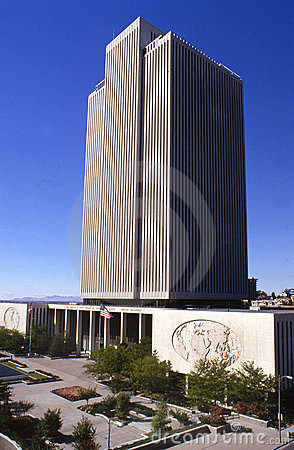
While Joseph Smith was in Liberty Jail he wrote an epistle to the church admonishing them to seek justice from the oppression they suffered at the hands of the Missourians. He condemns the "damning hand of murder, tyranny, and oppression," and offered the following injunction:
For there are many yet on earth among all sects, parties, and denominations, who are blinded by the subtle craftiness of men, whereby they lie in wait to deceive, and who are only kept from the truth because they know not where to find it--

Therefore, that we should waste and wear out our lives in bringing to light all the hidden things of darkness, wherein we know them; and they are truly manifest from heaven--These should then be attended to with great earnestness. (D&C 123:12-3, Emphasis added) 

Little did Joseph know, or maybe he did, that one of the sects that blind men by their subtle craftiness would be the church he himself established: The Church of Christ that was later changed to the Church of Jesus Christ of Latter-Day Saints. 

What a strange injunction, to "waste and wear out our livings in bringing to light all the hidden things of darkness." Does God really want us to focus so much on the things of darkness? It turns out that he does. Jesus exposed the hypocrisy of the Pharisees throughout much of his ministry and we are admonished to be men after his own manner. The modern-day Pharisees are richer and more powerful than ever and have sucked the life out of the Gospel of Jesus Christ. By their subtle craftiness the focus of the Gospel has changed from the worship and adoration of Christ to the worship and adoration of themselves. The Pharisees who run the ChurchTM  expect the poorest members, many of which do not have adequate food, to pay full tithes while they enjoy a comfy tithing-free stipend of $120K a year. As Rock Waterman has pointed out, they have turned the law of tithing on its head. And over the last few decades, they have reached a financial status that dwarfs even the Vatican. The LDS Church is now the wealthiest Church on the planet, enjoying a $100 billion hedge fund, while the Vatican is a distant second valued at $33 billion. See the video below:


For those who have eyes to see, the scriptures are full of condemnations and warnings about this latter-day behemoth. And no, it is not the stone cut without hands that Daniel spoke of. In fact, it has nothing to do with kingdom of God. The Lord declared it to be his enemy, and he has commanded his servants to throw down its tower and scatter its watchmen in a parable revealed to Joseph Smith. It is an end-time prophecy about the destruction of the LDS ChurchTM, accomplished by the Davidic servant that the Lord will send to fulfil the covenant that he has made to his people Israel. Before we get into the parable, there is another prophecy that sets the precedent for the cleansing of the Church. Apparently, the house of God will be so out of order that it'll require "one mighty and strong" to whip it back into shape:
And it shall come to pass that I, the Lord God, will send one mighty and strong, holding the scepter of power in his hand, clothed with light for a covering, whose mouth shall utter words, eternal words; while his bowels shall be a fountain of truth, to set in order the house of God, and to arrange by lot the inheritances of the saints whose names are found, and the names of their fathers, and of their children, enrolled in the book of the law of God;

While that man, who was called of God and appointed, that putteth forth his hand to steady the ark of God, shall fall by the shaft of death, like as a tree that is smitten by the vivid shaft of lightening. (D&C 85:7-8, Emphasis added) 

Let's reason together: if the LDS Church was really God's true church on earth, and led by revelation from 15 prophets, seers, and revelators, why on earth would it have to be set in order? For something to be set in order it would have to be out of order in the first place. Well, these verses are just the tip of the iceberg, after I get into the parable, you'll be left with no doubt that there's been a mutiny on the mothership. Indeed, we are not in Kirtland anymore, Joseph. Buckle up as we head down the rabbit hole. 

The Parable of the Nobleman and the Olive Trees

In 1833, only three years after the church was organized, the Lord related this parable to them, although I doubt many understood it. It reveals things that are happening today and will yet happen in the future; it was obviously written for us. And like Nephi, we would be wise to liken all scriptures to ourselves. Isn't that the entire point of scripture and prophecy? The Lord is attempting to convey a direct message to us in this parable. We should pay attention. It is found in Section 101 of the D&C. Note that the Lord introduces the parable as his "will concerning the redemption of Zion." Zion refers to the church because they were charged with building the latter-day Zion. They failed, hence it needs to be redeemed: 
A certain nobleman had a spot of land, very choice; and he said unto his servants: Go ye unto my vineyard, even upon this very choice piece of land, and plant twelve olive trees;

The very choice spot of land is America. You can cross reference this with Jacob 5, the olive trees represent the natural branches that the Lord grafted into the choice spot of land, or in other words, the restoration of his gospel in the promised land. The Lord commanded his servants to:

Set watchman round about them [the olive trees], and build a tower, that one may overlook the land round about, to be a watchman upon the tower, that mine olive trees may not be broken down when the enemy shall come to spoil and take upon themselves the fruit of my vineyard. 

These watchman were the original leader/servants of the church. They were charged with protecting the olive trees from the adversary. The olive trees represent the restored Doctrine of Christ as laid out in the Book of Mormon. This is the ascension path of repentance and baptism, the offering up of a sacrifice (a broken heart and a contrite spirit), the baptism of fire and of the Holy Ghost, becoming adopted by Jesus Christ and being spirituality begotten, and eventually entering into his rest or the fulness if his glory; the experience of the Second Comforter. 

Now we have to ask the question: how could the enemy spoil the fruit and take upon themselves the vineyard? The answer is simple. All they had to do was change the Doctrine of Christ to the doctrines of men. They took control of the vineyard (after Joseph and Hyrum were out of the way), and used it for their own purposes, replacing ascension with polygamy as the highest goal of the gospel. They become wolves in sheep clothing, subverting the church and pretending that Joseph had been the one behind all of their false doctrines and philosophies of men. 

Now, the servants of the nobleman went and did as their lord commanded them, and planted the olive trees, and built a hedge round about, and set watchmen, and began to build a tower. 

And while they were yet laying the foundation thereof, they began to say among themselves: And what need hath my lord of this tower? 

And consulted for a long time, saying among themselves: What need hath my lord of this tower, and seeing this is a time of peace?

Might not this money be given to the exchangers? For there is no need of these things.

One interpretation of the tower could be the Nauvoo temple; which was never finished before the time the Lord appointed to the Saints. He specifically promised them that if they built it in sufficient time that they should not be moved out of their place. Well, this is one verse (D&C 124:45) you will never hear in General Conference, because they were moved out of their place, and Utah celebrates this disobedience on the 24th of July. The implications of this were serious, the Lord actually said that if they failed in this one regard they would be rejected as a church with their dead:

But behold, at the end of this appointment your baptisms for your dead will not be acceptable unto me; and if you do not these things at the end of the appointment ye shall be rejected as a church, with your dead, saith the Lord your God. (D&C 124:32, Emphasis added)

We've had this verse in our cannon for nearly two-hundred years yet no one seems to notice it. Let me reiterate: the Latter-Day Saints were rejected as a church with their dead, and that means that none of their temple work for the dead is acceptable to God. Just let that sink in for a moment. We need to ask another question: what was the point of the tower, or temple, that the watchmen were supposed to build? To answer that we have to go back to Moses and the Israelites. Moses was commanded to build a tabernacle so the Lord could reveal the ordinances, statutes, judgments, memorials, sacrifices, washings and anointings, and solemn assemblies that pertain to laying the foundations of Zion. The Lord declared that his people are always commanded to build a holy house unto his holy name (See D&C 124:39).

Are the ordinances an end in themselves? No, they point to something much higher. They point to ascension, the real thing, a real audience with Christ. They are symbolic of Jacob's ladder, the ascension path to salvation. A piece of paper that says you are worthy to enter a building to perform repetitious rituals will NOT save you, yet in the modern Church, these have become idols. Moses knew that the rituals were only a type of the real thing, which he himself experienced. He spoke with the Lord face to face and was transfigured before him. He tried to get the children of Israel to do the same thing but they would not enter into the rest of the Lord. Instead they wanted a prophet to follow, and as a consequence, God took Moses and the Holy Priesthood out of their midst:

And this greater priesthood administereth the gospel and holdeth the key of the mysteries of the kingdom, even the key of the knowledge of God. Therefore, in the ordinances thereof, the power of godliness is manifest. For without this no man can see the face of God, even the Father, and live. 

Now this Moses plainly taught to the children of Israel in the wilderness, and sought diligently to sanctify his people that they might behold the face of God; But they hardened their hearts and could not endure his presence; therefore, the Lord in his wrath, for his anger was kindled against them, swore that they should not enter into his rest while in the wilderness, which rest is the fulness of his glory.

Therefore, he took Moses out of their midst, and the Holy Priesthood also; And the lesser priesthood continued, which priesthood holdeth the key of the ministering of angels and the preparatory gospel. (D&C 84:19-26

The lesser priesthood is the Aaronic, and just like the Israelites, it was all the Latter-Day Saints were left with after the death of Joseph and Hyrum. The Church rejected the fulness of the gospel, and hardened their hearts just as the Israelites did. Christ prophesied to the Nephites that the latter-day Gentiles, the LDS Church and other restoration branches, would do this very thing:

And thus commandeth the Father that I should say unto you: At that day when the Gentiles shall sin against my gospel, and shall reject the fulness of my gospel, and shall be lifted up in the pride of their hearts above all nations, and above all the people of the whole earth, and shall be filled with all manner of lyings, and of deceits, and of mishchiefs, and all manner of hypocrisy, and murders, and priestcrafts, and whoredoms, and of secret abominations; and if they shall do all those things, and shall reject the fulness of my gospel, behold, saith the Father, I will bring the fulness of my gospel from among them. (3 Nephi 16:10, Emphasis added)

You cannot reject something you do not have in the first place. This can only be addressing the Latter-Day Saints and other restoration branches, and for God to accuse them of murder, whoredoms and abominations should give us great pause. Whoredoms do not always mean sexual sin, in this case it most likely is referring to worshipping idols, like those who employ priestcraft (See 2 Nephi 26:29), men that set themselves up as light to the word to get praise and gain. The parable says that the servants gave the money that was supposed to be set aside for the tower to the "exchangers." Who are the exchangers? The merchants. This is a reference to Babylon. The focus of the Church went from the "welfare of Zion" to making money. They did this through investing tithing funds in business pursuits and the stock market. If you're wondering who the modern-day exchangers are, here is a list of some of the subsidiary companies owned by the LDS Church. Other sources claim there are up to 8,590 subsidiaries in the LDS corporate family. This is a financial empire we are talking about. Many members consider the prosperity of the Church a sign that God's providence is smiling down upon it. Here is what Nephi said about them:

And others will he pacify, and lull them away into carnal security, that they will say: All is well in Zion; yea, Zion prospereth, all is well--and thus the devil cheateth their souls, and leadeth them away carefully down to hell. (2 Nephi 28:21)

If there is any question as to what Jesus thinks of money exchangers in his holy house, just read what he did to those who were polluting the temple grounds in Jerusalem. Remember, the primary aim of Zion is to have no poor among us, not to make money. 

 Returning to the parable of the nobleman and the olive trees:

And while they were at variance one with another they became very slothful, and they hearkened not unto the commandments of their Lord. And the enemy came by night, and broke down the hedge; and the servants of the nobleman arose and were affrighted, and fled; and the enemy destroyed their works, and broke down the olive trees. (D&C 101:50-51)

Now who were these enemies that broke down the hedge and the olive trees? We know that after Joseph's death there was an apostolic coup d'état, meaning that the Twelve took power unto themselves that was never authorized by the Lord. Details describing the apostolic coup d'etat that forever altered the structural integrity of the LDS Church have been posted at Radio Free Mormon.  ( Or you can read the transcripts in two parts, titled How Jesus Christ Was Ousted As Head Of The Church Of Jesus Christ, and Brigham Young's Hostile Takeover.)


The short version is that D&C 107 undeniably declares that all quorums of priesthood are equal in power and authority to one another. This includes the First Presidency, the High Council, the Seventy, and the Twelve. No one quorum was to have absolute power over another. More specifically, the Twelve were never supposed to have charge over the church where stakes of Zion were already established. They only had authority in the mission field. 

A very important word has been omitted from the a Kirtland Council meeting held in 1835, that word was "no." From the original council meeting, the following was stated: "they are the twelve apostles who are called to the office of the Traveling High Council, who are to preside over the churches of the saints among the Gentiles where there is no presidency established." In the scrubbed version we have in the history of the church today, it says, "where there is a presidency established." But just in case there was any ambivalence in the matter, we have these words from Joseph:

Joseph Smith told the Twelve in 1835, May 2nd, that they had no right to go into Zion or any of its Stakes and there undertake to regulate the affairs thereof where there is a standing High Council. (Original Kirtland Council Minute Book)

Now this is my opinion, but the "hedge" in the parable could be referring to the separation of powers in the church that existed before the apostolic coup d'état; a hedge against corruption. After the apostles took over the affairs of the church, they "destroyed their works," i.e., re-wrote their history and expunged the Doctrine of Christ (the olive trees) from the teachings of the Church. 

Another thing to consider here is Joseph Smith's last dream he had the night before he was murdered. The farm in the dream represents the church:

I was back in Kirtland, Ohio, and I thought I would take a walk out by myself. and view my old farm, which I found grown up with weeds and brambles, and altogether bearing evidence of neglect and want of culture. I went into the barn, which I found without floor or doors, with the weather-boarding off, and was altogether in keeping with the farm. While I viewed the desolation around me, and was contemplating how it might be recovered from the curse upon it, there came rushing into the barn a company of furious men, who commenced to pick a quarrel with me. The leader of the party ordered me to leave the barn and farm, stating it was none of mine, and that I must give up all hope of ever possessing it. I told him the farm was given me by the Church, and although I had not any use of it for some time back, still I had not sold it, and according to righteous principles it belonged to me or the Church. He then grew furious and began to rail upon me, and threaten me, and said it never did belong to me nor to the Church. I then told him that I did not think it worth contending about, that I had no desire to live upon it in its present state, and if he thought he had a better right I would not quarrel with him about it but leave; but my assurance that I would not trouble him at present did not seem to satisfy him, as he seemed determined to quarrel with me, and threatened me with destruction of my body. While he was thus engaged, pouring out his bitter words upon me, a rabble rushed in and nearly filled the barn, drew out their knives, and began to quarrel among themselves for the premises, and for a moment forgot me, at which time I took opportunity to walk out of the barn about up to my ankles in mud. When I was a little distance from the barn, I heard them screeching and screaming in a very distressed manner, as it appeared they had engaged in a general fight with their knives. While they were thus engaged, the vision or dream ended. (History of the Church, 6:60-10)

Could this dream be describing the succession crises in the aftermath of Joseph's death? Is this what is meant by the Lord in the parable when he said the servants were at "variance" with each other? We know that Brigham Young had Sidney Rigdon excommunicated in the Fall of 1844, he was opposed to polygamy and was the last surviving member of the First Presidency and a viable threat to Brigham's authority. But even more conspicuous was the death of Samuel Smith, Joseph's brother who, according to scribe William Clayton, had been named to be Joseph's successor in the advent of the deaths of he and Hyrum. Samuel died under mysterious circumstances barely one month after the martyrdom, and the Smith family believed he was deliberately poisoned. You can read the details about it here. After the apostolic coup d'état, Young and the rest of the Twelve were free to implement their pseudo doctrines of plural marriage, racism, blood atonement, and Adam-God. The simple Doctrine of Christ as taught in the Book of Mormon (See 3 Nephi 11:31-41) disappeared from the Church, and despite the occasional lip service to it, is still missing today. Continuing with the parable:

Now, behold, the nobleman, the lord of the vineyard, called upon his servants, and said unto them, Why! what is the cause of this great evil? Ought ye not to have done even as I commanded you, and--after ye had planted the vineyard, and built the hedge round about, and set watchmen upon the walls thereof--built the tower also, and set a watchman upon the tower, and watched for my vineyard, and have not fallen asleep, lest the enemy should come upon you? And behold, the watchman upon the tower would have seen the enemy while he was yet afar off; and then ye could have made ready and kept the enemy from breaking down the hedge thereof, and saved my vineyard from the hands of the destroyer. (D&C 101:52-54)

The Lord is lamenting the fact that the restoration was incomplete. Satan had crept in and destroyed the olive trees and any chance of them producing good fruit. The early church rejected the fulness, and thus had Joseph and the higher priesthood taken out of their midst. In the video below the parable of the nobleman is explained, as well as the loss of the higher priesthood. He also explains why the baptismal prayer was changed from "having authority" to having been "commissioned." The change was not insignificant. Also explained is the name change of the church itself, it went from the "Church of Christ" to the "Church of the Latter-Day Saints." This was also significant. Jesus told the Nephites that his church should be called in his name (See 3 Nephi 27:5-9). If it is not called in his name it is simply not his church.


Continuing with the parable:

And the lord of the vineyard said unto one of his servants: Go and gather the residue of my servants, and take all the strength of mine house, which are my warriors, my young men, and they that are of middle age also among my servants, who are the strength of mine house, save those only whom I have appointed to tarry;

And go ye straightway unto my land of my vineyard, and redeem my vineyard; for it is mine; I have bought it with money. Therefore, get ye straightway unto my land; break down their tower, and scatter their watchmen.

And inasmuch as they gather together against you, avenge me of mine enemies, that by and by I may come with the residue of mine house and possess the land. And the servant said unto his Lord: When shall these things be? And he said unto the servant: When I will; go ye straightway, and do all things whatsoever I have commanded you; 

And this shall be my seal and blessing upon you--a faithful and wise steward in the midst of mine house, a ruler in my kingdom. And his servant went straightway, and did all things whatsoever his lord commanded him; and after many days all things were fulfilled. (D&C 101:55-62

In Section 103 the Lord revealed the name of the servant: Joseph Smith, Jr. But this prophecy has only been partially fulfilled. In D&C 103:21-26, the Lord commands Joseph Smith and other servants to "go up to the land of Zion" on the lands that had been purchased with money in Jackson County. But they were driven out; they never got the chance to throw down the tower and scatter the watchmen of their enemies. The Lord told them that if they were driven "from my goodly land," that they should curse their enemies and avenge them "unto the third and fourth generation." In generational time this is about 200 years. It is likely that the parable will be fulfilled in our generation. Back in Section 101 the servant asks the Lord when these things shall be, and the Lord answered, "when I will." The parable ends with the promise that after "many days all things were fulfilled." 

This will happen with the help of the end-time servant. He will lead a future exodus of the Lord's people (whoever repents and enters into covenant with Christ) out of the clutches of the king of Assyria, Isaiah's code name for the last days dictator of the entire world. The servant will use the sealing power to command the elements to release God's people from bondage, and to embark on a journey to build the last days Zion. Some people think that this end-time/Davidic servant is Joseph Smith, who will come back to earth in a new body and become the "one mighty and strong." I am not sure what I think about who the servant actually is, but the important thing is that the scriptures are full of references to this guy. The Lord is definitely sending someone like unto Moses, who led the children of Israel out of Egyptian bondage. Jesus spoke about this to the Nephites, who were commanded to record it for us. The ironic thing is that the "great and marvelous work" is not the restoration of a New Testament style church through Joseph Smith assumed by many Latter-day Saints. It has nothing to do with the LDS Church, although they have been instrumental in helping to spread the Book of Mormon throughout the world. The "great and marvelous work" has NOT happened yet because it will be accomplished by the Davidic servant. 

The Lord told the Nephites (See 3 Nephi 21) that the gospel would come to their seed from the Gentiles. In this context he is speaking specifically about the Latter-Day Saints; they are the church distributing the Book of Mormon. But the Lord says that he is doing this so they (the Gentiles) can have a chance to repent and know the "true points of my gospel." How ironic indeed that those who are bringing the gospel to the remnant of the Jacob/Nephites would be the ones who need to repent. We arrogantly assume we have all the truth but through our ignorance we are fulfilling the Lord's purposes at the same time. It's actually kind of funny if you think about it. Here is what Jesus told the Nephites about the "Gentiles": 

For thus it behooveth the Father that it [the Book of Mormon] should come forth from the Gentiles, that he may show forth his power unto the Gentiles, for this cause that the Gentiles, if they will not harden their hearts, that they may repent and come unto me and be baptized in my name and know of the true points of my doctrine, that they may be numbered among my people, O house of Israel; (3 Nephi 21:6).

How do we know that Christ's use of Gentile is referencing the LDS Church? There are two other places in the Book of Mormon that testify of this very thing. Hence, we have three witnesses which is God's pattern for establishing truth. The first is the title page, written by Joseph Smith, that says, "to come forth in due time by way of the Gentile." And the other testimony is given by Nephi:

... and he [Lehi] meaneth that it shall come by way of the Gentiles, that the Lord may show forth his power unto the Gentiles... (1 Nephi 15:17)

And just so there is no confusion there is one more place in scripture that reaffirms this fact. In the dedicatory prayer of the Kirtland temple, which Joseph says was given to him by revelation, we have this:

Now these words, O Lord, we have spoken before thee, concerning the revelations and commandments which thou hast given unto us, who are identified with the Gentiles. (D&C 109:60, Emphasis added) 

Yes it is true that Gentile also means nations, especially those that live on the American and European continents, but the Book of Mormon specifically uses the term to reference the Latter-Day Saints. What other group of people brought forth the Book of Mormon and is spreading it all over the world? Once you realize what the Book of Mormon prophets are actually saying about us, you realize this sobering truth: the Gentiles (members of the LDS Church) are on trial and need to repent, they have rejected the fulness of Christ's gospel and are lifted up in the pride of their hearts above all nations. But the good news is that God, in his tender mercy, has given us the chance to repent:

But if they [the Gentiles] will repent and hearken unto my words, and harden not their hearts, I will establish my church among them, and they shall come unto the covenant and be numbered among this the remnant of Jacob, unto whom I have given this land for their inheritance;

And they shall assist my people, the remnant of Jacob, and also as many of the house of Israel as shall come, that they may build a city, which shall be called the New Jerusalem. (3 Nephi 21:22-23

Isn't it interesting that Christ says that he will establish his church among us? Aren't we already the Lord's true church? What need would the Lord have to establish a church among the Gentiles if we already have one? It could only mean one thing: the church we have is not the Lord's church. It is some other church and has become corrupted. In Mormon chapter 8 he addresses those who "receiveth this record," and he is not kind in what he is saying. Those who have received the Book of Mormon are the LDS Church and all the other restoration branches and splinter groups. This is what Mormon says about us, and it is terribly sobering:

Behold, I speak unto you as if ye were present, and yet ye are not. But behold, Jesus Christ hath shown you unto me, and I know your doing.

And I know that ye do walk in the pride of your hearts; and there are none save a few who do not lift themselves up in the pride of their hearts, unto the wearing of very fine apparel, unto envying, and strifes, and malice, and persecutions, and all manner of iniquities; and your churches, yea even every one, have become polluted because of the pride of your hearts.

For behold, ye do love money, and your substance, and your fine apparel, and the adorning of your churches, more than ye love the poor and the needy, the sick and afflicted.

O ye pollutions, ye hypocrites, ye teachers, who sell yourselves for that which will canker, why have ye polluted the holy church of God? Why are ye ashamed to take upon you the name of Christ? Why do ye not think that greater is the value of an endless happiness than that misery which never dies--because of the the praise of the world? (Mormon 8:35-38, Emphases added)

So if the great and marvelous work is not the LDS Church, than what is it? If we go back to 3 Nephi 21 Jesus tells us exactly what it is. And it is not for us, who are the Gentiles, it is for the remnant of Jacob, those Nephite descendants that the Lord promised this land [America] to. But he has given us the opportunity to be partakers of it with them, again if we repent:

For in that day for my sake shall the Father work a work, which shall be a great and marvelous work among them; and there shall be among them those who will not believe it, although a man shall declare it unto them.

But behold, the life of my servant shall be in my hand; therefore they shall not hurt him, although he shall be marred because of them. Yet I will heal him, for I will show unto them that my wisdom is greater than the cunning of the devil. 

Therefore it shall come to pass that whosoever will not believe in my words, who am Jesus Christ, which the Father shall cause him [the end-time servant] to bring forth unto the Gentiles, and shall give unto him power that he shall bring them forth unto the Gentiles, (it shall be done even as Moses said) they shall be cut off from among my people who are of the covenant. 

And my people who are a remnant of Jacob shall be among the Gentiles, yea, in the midst of them as a lion among the beasts of the forests, as a young lion among the flocks of sheep, who, if he go through both treadeth down and teareth in pieces, and none can deliver. (3 Nephi 21:9-12)

This Davidic servant, whoever it is, will apparently bring forth Jesus' words to the Gentiles (the LDS Church). Are these new scriptures that Christ is talking about? I am merely speculating here but this could be the sealed portion of the Book of Mormon and a full translation of the Plates of Brass and the New Testament, which reveal all things from the beginning of the world to the end. Jesus gives the remnant of Jacob a sign that they will know when these things are about to take place. The sign is that "when these works [Book of Mormon] and the works which shall be wrought among you hereafter [new scriptures?] shall come forth from the Gentiles unto your seed which shall dwindle in unbelief because of iniquity." (Disclaimer: I may be wrong about all of this, please know it is just my speculative opinion, I have updated this paragraph since my first posting).

And when these things come to pass that thy seed [the Nephites] shall begin to know these things--it shall be a sign unto them, that they may know that the work of the Father hath already commenced unto the fulfilling of the covenant which he hath made unto the people who are of the house of Israel. 

And when that day shall come, it shall come to pass that kings shall shut their mouths; for that which had not been told them shall they see; and that which they had not heard shall they consider. (3 Nephi 21:7-8)

The Davidic servant will not come from among the "Brethren" of the LDS Church. He will come from the lower margins of society like all true prophets do, and when he brings forth these scriptures the leaders of the LDS Church will most likely proclaim him to be an apostate and a fraud. But if we do not believe in Christ's words, which will come through this servant, we will be cut off among from the Lord's people. And according to Jesus, this is what that awful fate entails:

Yea, wo be unto the Gentiles except they repent; for it shall come to pass in that day, saith the Father, that I will cut off thy horses out of the midst of thee, and I will destroy thy chariots; And I will cut off the cities of thy land, and throw down all thy strongholds; And I will cut off witchcrafts out of thy land, and thou shalt have no more soothsayers; 

Thy graven images I will also cut off, and thy standing images out of the midst of thee, and thou shalt no more worship the works of thy hands; And I will pluck up the groves out of the midst of thee; so will I destroy thy cities. And it shall come to pass that all lyings, and deceivings, and envyings, and strifes, and priestcrafts, and whoredoms, shall be done away. 

For it shall come to pass, saith the Father, that at the day whosoever will not repent and come unto my Beloved Son, them will I cut off from among my people, O house of Israel; And I will execute vengeance and fury upon them, even as upon the heathen, such as they have not heard. (3 Nephi 21:14-21

What could these things mean? Horses and chariots could mean horse power and vehicles, strongholds could mean military power, witchcrafts and soothsayers could mean pharmaceutical companies and modern medicine (those that harm rather than heal), graven images and standing images could mean sun worship symbols (used by many corporations and the U.S. government) and statues of men that we adulate and idolize. It could also mean government and religious leaders, flags, state seals and emblems, television and internet, fiat currency, or the worldly possessions we have set our hearts upon. Priestcrafts and whoredoms could mean false religion and idol worship. It doesn't matter what these specific things mean, the message here is that our society will be completely destroyed, and if we do not repent and join the remnant of Jacob, we will be left unto ourselves to survive in the aftermath. 

To repent means that we give up all these idols and return to Jesus Christ; to consider ourselves fools before God and offer a sacrifice to him (a broken heart and a contrite spirit), and to give up our false traditions, our vain ambitions of wealth, prestige, and power, and to stop trusting in the arm of flesh. In spite of all the destructions that will shortly come upon us, God has offered us a way out. He is incredibly merciful and loving; he wants all of us there with him at the wedding feast. He has provided an escape, but it requires us to be humble enough to recognize that we need to repent. Unfortunately, this is the hardest part for many people, who are content to rationalize that all is well in Zion, and think they have nothing to repent of, or nothing new to learn. 

The New Tower and the New Watchmen

The Lord charges the servant and those that will be with him to throw down the tower and scatter the watchmen of the enemy that has taken over his vineyard. I am not sure how this will play out when it actually happens, but we do have a few clues in scriptures. The Lord declares that the last days tribulation will begin upon his house: 
Verily, verily, I say unto you, darkness covereth the earth, and gross darkness the minds of the people, and all flesh has become corrupt before my face. Behold, vengeance cometh speedily upon the inhabitants of the earth, a day of wrath, a day of burning, a day of desolation, of weeping, of mourning, and of lamentation; and as a whirlwind it shall come upon all the face of the earth, saith the Lord.

And upon my house shall it begin, and from my house shall it go forth, saith the Lord; First among those among you, saith the Lord, who have professed to know my name and have not known me, and have blasphemed against me in the midst of my house, saith the Lord. (D&C 112:23-26, Emphasis added) 

If "all flesh has become corrupt" before God then this certainly includes the Latter-Day Saints. They, and everyone else, fall into the category of "all flesh." But who specifically in the Church have professed to know him and blasphemed his name? These would be the leaders, the echeloned top-tier 15, who pretend to be "special witnesses" of him but confess that they have never had an experience like Paul on the road to Damascus. Elder Oaks has said as much: 


But perhaps even worse than that, they use the name of God in vain by asserting that they have some claim to his authority, which they assume computes to authority over you. But if you look at their fruits they have nothing to show for it spiritually. Indeed, they are spiritually dead. We never hear in General Conference things like, "an angel appeared to me last night and told me do deliver this message," as king Benjamin told his people. We never hear accounts of miraculous healings of the sick, or mountains being moved, or prisons tumbling to the ground, or any signs that Jesus declared would follow those that believe. Instead we hear long and boring talks about how we should trust in them and lately how we should trust in our government and health authorities when it comes to vaccines. The blessings of the sick that we do hear about usually result in the death of the person being blessed, and their death is called a "miracle" because they came back to church or did their temple work before they died. See this podcast for a plethora of these stories told in conference, it is almost as if they are proud that they have no authority to heal. And despite being full of dead works, they have the audacity to assert that they "cannot lead us astray." 

But even worse than dead works and false doctrine is that fact that the LDS watchmen have steadily been aligning themselves with global elites and the New World Order. This movement has been exponential since Russell Nelson has taken the reigns of the corporation sole that owns the LDS conglomerate. In March of 2019 Nelson met with Pope Francis at the Vatican, lovingly referring to him as "his holiness" and from the picture below appearing to shake his hand in a Masonic grip:


As you can see Thomas Monson and George Bush shook hands in a similar way:


In Freemasonic circles, this handshake is known as the Grip of the Lion's Paw. Here is what it looks like:

This grip goes back to the ancient Egyptian mystery schools. It is symbolic of the ritualistic raising of Osiris and Hiram Abiff' in Masonic lore. The image below was discovered in the sarcophagus of one of the ancient Pharaohs:


This image can be found in the book, Stellar Theology and Masonic Astronomy, by Robert Hewitt Brown, and this is the interpretation of it: 
The emblem may be thus explained: the form that lies dead before the alter is that of Osiris, the personified sun-god, whom the candidate represents in the drama of initiation, lying dead at the winter solstice. The cross upon his breast refers to the great celestial cross, or intersection of the celestial equator by the ecliptic. The figure of the lion grasping the dead sun-god by the hand alludes to the constellation of Leo and the summer solstice, at which point the sun is raised to life and glory, as has been just explained in the allegory of the resurrection of the sun, and denotes that the candidate is about to be raised from a symbolical death to life and power by the grip of the lion's paw. This is made clearly manifest from the fact that the lion holds in his other paw the ancient Egyptian symbol of eternal life, or the Cruz Ansata... (p. 98)

If this Masonic stuff is new to you, check out my Mystery Babylon series on this blog, especially Part II where I cover symbolism.  The short of it is that Freemasons at the deepest level believe that they can rise to become gods and live eternally without the need of a Savior. It is humanism at it's extreme, and this is what the LDS leaders seem to be into. In fact it's more than humanism, its Luciferiansim, the religion of Mystery Babylon itself. The leaders of the Church have joined themselves to it, and ironically, have become part of the Secret Combination that President Benson warned us about from the pulpit. Just about everything the "watchmen" have been up to these days have to do with supporting globalism and one-world government. Check out this video from Rebekah Griffin to find out just how involved in globalism they are:


Rebekah covers multiple areas of LDS support, both rhetorical and financial, to global foundations and elites. Some of them include UN Agenda 2030, the world Council of Churches (Ecumenism), the Bill Gates Foundation, and the United Nations itself. Most alarming is Rebekah's report on Sharon Eubanks, first counselor in the General Relief Society Presidency, who at the 2018 G20 Interfaith Forum asserted that "Agenda 2030 won't happen without religion," and its "trusted faith leaders." One can only assume that statement meant that religious leaders will try to convince the members that God wants them to support global institutions.

This master deception is already happening in the Church, evidenced by D. Todd Christopherson's October 2020 talk entitled, Sustainable Societies. In a discordant cacophony of blundering illogic, Christopherson compares the UN's agenda 2030 goals to create sustainable societies with the Zion society described in 4 Nephi and the city of Enoch. Agenda 2030 is communism on stilts, done with the force of a world government under point of a gun, although they assert it is "voluntary." For those who survive global depopulation protocols, agenda 2030 would force them to live in small cubicles, be deprived of a car and freedom to travel, and work as a slave at whatever job the government assigns them. This would be a dystopian hell on earth. Surely Christopherson and the rest of the Church leaders know this, but because they are elites they will get to keep living as lavishly as they are now. Don't be fooled, sustainable societies are only sustainable for the elite, not for you and me. Remember that one of Al Gore's houses was 10,000 square feet? They don't care about you or the environment. They want to eliminate you. 

I can only imagine what an obscenity Christopherson's talk was to the Lord. Zion is the highest goal that we can achieve collectively here on this earth. It literally takes us from a telestial state into a terrestrial state, and it's accomplished without government, through voluntary means. You cannot legislate poverty out of existence, it can only be done through individuals working together without coercion. This talk is nothing but a bait and switch, a ploy to get the duped members of the Church to soften up on globalism because of what their "trusted faith leaders" are spewing from the pulpits; applying the philosophies of men to cherry-picked scripture. 

Rebekah also covered the Church's tribute to the United Nations in a 2020 Music and the Spoken Word presentation. In addition to President Benson's book, An Enemy Hath Done This, G. Edward Griffin's book, The Fearful Master: A Second Look at the United Nations, documents the fact that every Secretary-General of the UN from 1948 to 1964 was a card-carrying communist. Griffin wrote the book in 1964 and focuses on one of the worst human rights atrocities committed in modern history... perpetrated by the UN. In 1960 the province of Katanga sought its independence from the Congo, which had just received its independence from Belgium. The CONAKAT leader of Katanga, Moise Tshombe, was uncomfortable with the communist leanings of Patrice Lumumba, the new Prime Minister of Congo. Tshombe declared that Katanga would secede from the Congo, and requested help from the Belgium government, which came in the form of money and troops. Lumumba demanded that Belgian troops leave, and sought assistance from the UN, which resulted in UN Resolution 143, completely backed by the United States. When UN troops moved in to "assist" in a "peace-keeping" mission, whole-sale slaughter of innocent civilians ensued. UN air-gunners deliberately targeted civilians in streets, schools, and even hospitals. UN ground troops routinely murdered civilians, both men and women, sparing neither the young nor the elderly, and looting and pillaging along the way. 

This is all documented in chapter 1 of Griffin's book, with first-hand testimony of the events. This violent and murderous institution is the one the LDS Church is now lauding as if it is some kind of lofty Zionist ideal, pretending that warnings against it from men like J. Reuben Clark, David O. McKay, and Ezra Taft Benson were never uttered. But Church leaders have never been shy about covering up their history or dumping past talks down the memory hole when it suits them. The only "oracles" that matter to the leadership today are those now living and holding power, and the most important doctrine of the watchmen is to follow "thou" them. The Church's support of the UN goes beyond lip service and musical tributes. As Rebekah points out in the video, Presiding Bishop Gerald Causse spoke at a 2019 UN Civil Society conference where it was revealed that the LDS Church is an official sponsor and "accredited partner" of the UN, which computes to financial contributions. This is where your $100 billion is going; building up the implements of slavery, murder and destruction. Mormon saw this very thing happening when he saw our day. It seems as though he is speaking directly to the Church leaders when he rhetorically asks:

Yea, why do ye build up your secret combinations to get gain, and cause that widows should mourn before the Lord, and also orphans to mourn before the Lord, and also the blood of their fathers and their husbands to cry unto the Lord from the ground, for vengeance upon your heads? Behold, the sword of vengeance hangeth over you; and the time soon cometh that he avengeth the blood of the saints upon you, for he will not suffer their cries any longer. (Mormon 8:40-41

When the end-time servant comes to set the house of God in order, he will be contending against more than just a Church. The new tower of the watchmen is a high-rise commercial sky-scraper, directing a corporate empire, with ties to governments, secret combinations, and global organizations. They are so intertwined with Mystery Babylon that only destruction from a just God can separate the bond between church and state. Remember what Satan said, "you can buy anything in this world for money," and with that treasure buy up armies, navies, and tyrants who "reign with blood and horror on this earth." Supporting global institutions whose goal is depopulation, a one-world socialistic government, and the abolition of inalienable rights and private property is about as Satanic as it gets. But the good news is that God will not allow these institutions to continue unabated. They will have their season of oppression and bondage, but God wins in the end. Consider this prophecy of Nephi:

And that great pit, which hath been digged for them by that great and abominable church, which was founded by the devil and his children, that he might lead away the souls of men down to hell--yea, that great pit which hath been digged for the destruction of men shall be filled by those who digged it, unto their utter destruction, saith the Lamb of God; not the destruction of the soul, save it be casting of it into that hell which hath no end. (1 Nephi 14:3)

Notice the caveat at the end, "not the destruction of the soul." Nephi is talking about physical destruction, not only spiritual punishment after death. Read the rest of the chapter for context, as well as John the Revelator's prophecy that Babylon will fall in one hour. But even more poignant, are the words of Jesus Christ himself, which he spoke about those who form churches but not in his name; whose words I'll end with:

And if it so be that the church is built upon my gospel then will the Father show forth his own works in it. But if it be not built upon my gospel, and is built upon the works of men, or upon the works of the devil, verily I say unto you they have joy in their works for a season, and by and by the end cometh, and they are hewn down and cast into the fire, from whence there is no return. For their works do follow them, for it is because of their works that they are hewn down; therefore remember the thing that I have told you. (3 Nephi 27:10-11)


Postscript: New YouTube Channels

I discovered a new channel on YouTube called Sheep or Wolves, barely a few days old. So far the content is excellent and scriptural based. Click the link below:


And here is the link to Rebekah Griffin's excellent new channel:

Sunday, February 27, 2022

The Greatest Revolutionary of All Time

 Previously: The Constitution of No Authority


When Jesus commissioned the twelve apostles he told them he had not come to send peace on earth, but a sword. What did he mean by that? Isn't Jesus suppose to be the Prince of Peace? Well, being the Prince of Peace doesn't mean you have to make peace with evil. After all, we all fought a war before we were born with an adversary that Christ himself cast out of heaven. That war continues here on earth. Satan's armies are highly organized, they control the world's political, economic, and religious apparatuses and institutions. When the Son of God was born a mortal on this earthly abode, he faced his enemy from an entirely new perspective. Spiritually they were no match for him, as myriad accounts in scripture relate. In one instance, they desperately begged him to possess a herd of swine rather then to remain disembodied. But Jesus had to face their mortal cronies as well: Mystery Babylon and the governments and religions she controls. 

Yes it is true that our Lord did not have to face that enemy. He told Pilate that he could've easily called down twelve legions of angels to deliver him from the Romans. Yet he stayed the course and fearlessly took on the largest military power of the known world. He let them kill him. Have you ever wondered why his suffering didn't end after Gethsemane? Or why he had to be scourged, humiliated, spit upon, beaten, and crucified with common criminals? Wasn't bleeding from every pore enough? Why did he have to experience torture and excruciating pain till the bitter end? I think the clue is found in Jesus' own words he spoke to the Nephites. He told them that the Father sent him to be lifted up on the cross to draw all men unto him. The word draw can be defined in two ways, (1) "to cause to move after or toward one by applying continuous force; drag; pull," or (2) "to cause to move in a given direction or to a given position, as by leading."

Which of these definitions applies to the Lord's use of the word draw? Well, that all depends on your definition of power as a motivator of action. Is power better wielded through coercion or persuasion? Let me ask this question another way. Is it better to drag people or to lead them? Jesus led by love, service, and persuasion, yet he amassed a posthumous following that dwarfed those of any Caesar, famous General, or other "great" political figure who exerted power through brute force. The untold numbers of Christians who willingly gave their lives because they would not deny Christ were motivated by his example of leadership. He was the great martyr. He faced evil without violently resisting it, which made him more powerful than any empire. God's power comes from his honor, which can only be attained through voluntary means. No one ever honored someone by force. Force only leads to resentment. 

Jesus was the greatest revolutionary because he stood up to tyranny and oppression without conventional weapons. It takes a brave man to fight against tyranny with a sword, but it is a far braver man who does so without one. It is something more than valor to look your enemy, and certain death, straight in the eye, knowing that they will kill you because what you stand for frightens the hell out of them. Christ's teachings were so revolutionary that they had to get rid of him; his very words challenged the political and religious authorities of his day. It was precisely the murderous actions of these cowards that assisted Jesus in drawing all men unto him. Who is not inspired by the story of an innocent man executed by a tyrannical government for standing up for the downtrodden? The story of Christ is the most inspiring account in history, touching hearts over multiple millennia. 

Jesus taught these revolutionary principles in his magnum opus, the Sermon on the Mount, the most powerful sermon ever preached; the roadmap to salvation. No wonder he repeated it to the Nephites. In it he pulverizes every facet of Jewish orthodoxy and Roman authority, without ever mentioning them by name. His words speak for themselves. Unfortunately, we have overlooked and diluted these revolutionary teachings in the scrubbed versions taught in modern religion. It’s time we let Christ speak for himself. What follows will be parts of the Sermon on the Mount retold, unvarnished and unedited. In its true form and original meaning, it is the most revolutionary language ever spoken.

 Anything but Pacifist 

The words of Jesus' sermon appear at first glance to imply that he is telling his followers to submit to unjust authority, but if you take a second look and do a little digging, you find just the opposite is true. A man who did a lot of work in this subject is the late Walter Wink. He has written several books on Christianity and nonviolence, but in the video below he presents the basics of Jesus' anti-authoritarian teachings in the Sermon on the Mount. There are three injunctions that Christ gave to his disciples that modern religion has diluted significantly: (1) turn the the other cheek, (2) go the extra mile, and (3) give your cloak to the man who takes your coat in a legal battle.


Walter starts off by explaining an overlooked translation issue that is present in the King James version of the Bible. In Matthew the Lord admonishes us to resist not evil. Wink points out that the word resist was translated from the original Greek word antistenai, which is two words, anti (against), and stenai (stand). This is where our modern English phrase "make a stand," or "withstand,” comes from. Wink explains that this word was used in Old Testament translations in reference to war. So even though Jesus is essentially saying don't resist evil with violence, he is NOT saying that you can’t resist evil at all. King James picked up on Jesus' revolutionary language and was horrified that Presbyterians were smuggling in Geneva Bibles during the Protestant Reformation, so in his version of the Bible he changed the language to subtly imply that Christ was saying that you have to submit to authority, all in an attempt to prevent insurrection. In my Mystery Babylon Part II post I quoted Manly P. Hall, who stated that Francis Bacon was tasked with integrating Masonic symbolism into the Bible. Well, Christ's teachings were also watered-down; this is what Nephi meant when he said that the Great and Abominable church removed the plain and precious teachings of the Lamb. Part of those teachings were how to stick it to the man... but in a loving way. 

Jesus is God, and has condescended from his godly status to atone for our sins and show us a more godly path. His ways are not our ways. Our natural inclination is to resist evil with evil, or return violence with violence, but Christ shows us a much more powerful way; one that allows the victim to stand up for himself while loving his enemies simultaneously. This is what Wink calls "The Third Way," which he explains below. The King James version of the bible implies that:
Jesus is made to authorize monarchical absolutism. Submission to the powers that be the king insists is the will of God [divine right of kings]. And most translators meekly followed this path until this very day. Jesus is not telling us to submit to evil, but to refuse to oppose it on its own terms. He is urging us to transcend both passivity and violence by finding a third way. One that is assertive and yet, nonviolent. (Transcript of video)

With that introduction let's examine these three injunctions. The first is found in Matthew 5:39:

But I say unto you, That ye resist not evil: but whosever shall smite thee on thy right cheek, turn to him the other also. 

What is the significance of the right cheek? To understand the context of this verse we have to know something about Jewish culture. To the Jews there were two ways to hit someone: with a fist or with a backhand. If you hit someone with a fist you were in a fight with an equal, if the backhand was used you were humiliating an inferior. Two people facing each other have only two choices for striking the right cheek: a backhanded right hand blow, or a fist or slap from the left hand. But in Jewish culture the left hand was used for unclean tasks, so no one would be caught dead using it to strike a servant or a slave. This would've been humiliating to the master. So we know right off the bat that Jesus is speaking to the downtrodden, not the elite. Now, after someone hits you on the right cheek, if you offer them the left they have two more choices: they can hit you with a right-handed fist or slap, or a left-handed backhand. Now they are in a conundrum; if they choose the left hand they face humiliation from their peers, if they choose the right hand they are forced to acknowledge that the victim is an equal. This is beautiful poetic justice. In classic Jesus style, the abuse is deflected and the abuser is confounded. Without saying a single word, the victim is communicating that they are a fellow human, a child of God endowed with inalienable rights. The perpetrator realizes that the victim is standing up for themselves and is forced to acknowledge their humanity, if only for a moment. In the best case scenario, the victim regains their dignity and the abuser's heart is softened. This is the power of the "third way."

The next injunction is found in the subsequent verse:

And if any man will sue thee at the law, and take away they coat, let him have thy cloak also. (Matthew 5:40)

This one is loaded with meaning. In Jewish culture there were only two garments: the outer and the inner. The coat was the outer and the cloak was the inner. They didn't wear boxer briefs or "tighty whiteys." What Jesus was saying is that if you can’t pay your debts and someone takes your outer garment for compensation, than also give them the shirt off your back, and once that was off you were literally standing there stark naked. And being naked was considered taboo, not to the person who is naked, but to the onlookers. In a public court of law, every person who is part of the corrupt system, i.e., judge, lawyer, and plaintiff, would be absolutely humiliated and shamed by seeing a naked person. The entire system would be exposed for the fraud that it is. The debtor, by stripping naked, would be unmasking the injustice of the entire political structure, in essence declaring that the emperor has no clothes. 

But to really grasp the message here, we have to understand why the debtor can't pay his bills in the first place. Remember this is a Roman tribunal, and what did the Roman's practice? Maritime Admiralty Law. Yes folks, Mystery Babylon controlled ancient Jewish society just as they do American society today. This was a monetary system based upon debt and feudalism. The Romans appointed certain men to be the equivalent of  "lords" and "nobles" who were granted special privilege and tax collection power; some of them were Jewish. These received the inflated money first (kind of like Haliburton, IBM, and Black Rock), and lent the money out as hedge funds. This was crony capitalism. The poor debtor was using devalued currency to pay his bills, he was paying feudal rents on his land, and he was forced to go into debt just to merely survive. This verse is not about one man owing another man some money. This is a revolutionary statement against corrupt banking systems; against corrupt government and cronyism. Debtors had no rights in these military tribunals, they were considered personas, not flesh and blood Jews. So Jesus’ admonition to strip naked would force the elites to see that they did have flesh and blood; that the maritime system was so corrupt and ridiculous that it took everything from them, even their last piece of clothing. Can you imagine someone doing this today in a courtroom? Can you imagine the absurdity, the shrieks from the onlookers? This is the type of revolutionary language that Jesus is speaking; this is a declaration of human rights against tyranny and usury. Now when you re-read Jesus' words, "render unto Caesar the things that are Caesar's," you can clearly see that he was being sarcastic and facetious. You can begin to see his true personality coming through the glass through which we see darkly

Now onto the third injunction:

And whosoever compel thee to go a mile, go with him twain. (Matthew 5:41)

This one has been the source of the all too-often repeated platitude "go the extra mile." It has a certain ring of nicety and religious piety. Yes bishop, I did some extra good works this week, I went to the temple twice, I served in the soup kitchen, I led the music in primary, I held FHE with my family and did scripture study morning and evening, I magnified my calling, I... you get the point. But this verse has nothing to do with religion and everything to do with standing up against tyranny. What Jesus was suggesting was a clever way to love your enemy and get him into a hell of a lot of trouble at the same time. Remember when Jesus told his apostles to be "wise as serpents, and harmless as doves"? Well this a perfect way to do just that. Who was compelling the Jews to a go a mile? Remember this was a Roman military occupation, and as I stated above the Jews were under Roman martial law. In that law there was a caveat that a Roman soldier could compel a conquered civilian to carry his pack for a mile, but no further. Why? The Roman authorities did not want the Jews to be too brutalized because that could incite a rebellion. They were a world military empire, they had to keep their fighting resources out in the front lines of new territories they were conquering. They did not want to have to deal with insurrections of locals who were already conquered. 

So when a Roman soldier compelled a Jew to carry his pack more than a mile this was an infraction of military code. Here is what Wink said were the penalties for such a violation:

With few exceptions, minor infractions were left to the disciplinary control of the centurion, head of 100 men. He might fine the offending soldier, or flog him, or put him on a ration of barely instead of wheat, or make him camp outside the fortifications, or force him to stand all day before the general's tent holding a clod of dirt in his hands. (Transcript of video)

Can you see the genius behind Jesus' words? After the mile is up the Roman soldier motions for the Jew to give his pack back. The Jew says, "no, I don't mind going further, you look really tired and I insist." Can you imagine the bafflement of the soldier? He thinks to himself, huh, that sounds nice, but what is this Jew's angle? Why is he being nice? They usually scatter like roaches when we enter a new city. Is he being genuine or trying to get me in trouble? The soldier is backed into another logical conundrum. He doesn't know what to do. But at the same time, the downtrodden Jew is once again declaring his humanity and his disdain for the tyrannical system. He is using peaceful and nonviolent means to stand up against the most powerful military in the world. Can you imagine such a courageous sentiment? Again, Christ is admonishing his disciples to stand up for themselves against tyranny. This is his nonviolent revolutionary way. Don't fight evil on its own terms, do it in the way that heaven does. A way that touches the hearts of both victim and perpetrator. 

I have only covered three short verses of the Sermon on the Mount. Can you see how Jesus loads every word with meaning? Next we will examine what Jesus meant by swearing oaths.

Do Not Swear At All

The verses under examination including the following:
Again, ye have heard that it hath been said by them of old time, Thou shalt not forswear thyself, but shalt perform unto the Lord thine oaths. But I say unto you, Swear not at all; neither by heaven, for it is God's throne: Nor by the earth; for it is his footstool: neither by Jerusalem; for it is the city of the great King. Neither shalt thou swear by thy head, because thou canst not make one hair black or white. But let your communication be, Yea, yea; Nay, nay: for whatsoever is more than these cometh of evil. (Matthew 5: 33-37)

In everything Jesus teaches there are dual meanings and implications: the more general or superficial meaning, and the deeper or more intrinsic meaning. There are layers of meaning in scripture, and what level you comprehend depends on how much of the mysteries of God are imparted to you. And whatever you think you understand, there is always a deeper level. 

The more obvious meaning of these verses in Matthew is that Jesus is teaching us that we should keep our word. The word forswear means to break an oath or lie under oath. He's telling you not to get yourself in situations where you have to lie or break a promise, or in other words, don't make promises you can't keep. He is also imploring you not to swear (which is a word that came from the old English word swerian, meaning to "take on oath") to inanimate objects like the heavens or the earth. In the Old Testament it was explicitly taught that a man should only swear by the name of God, not to "them that are no gods." By the phrase you can't "make one hair black or white," Jesus is saying that you as a mortal are powerless to change things you have no control over, so don't promise the world when you can't deliver it. And keep meaningless phrases like "I swear to God, or I swear by all I hold dear, or I swear on my mother's grave," out of your daily conversions. In other words, don't be full of it and be a straight shooter. If something is true say "yes," if something is false, say "no." Straightforward enough right? 

Now for the deeper, more revolutionary meaning. Jesus declares that them of old were to swear only to God, but now he's telling his followers to swear not all all. We know that the word swear means to take on oath, so Jesus is proscribing oaths. Why would he do that? Who else takes oaths? Secret societies, mystery school initiates, government officials, religious authorities, fraternal organizations, etc. The first oath goes back to Cain and Satan. Satan told Cain and his brethren to swear by their heads, their throats, and by the living God, to keep the murder of Able a secret. This event documents the beginning of secret combinations, which became the model for corrupt government: theft and murder for gain. Remember what Lysander Spooner called government? A secret band of robbers and murderers. 

The word oath appears in the Book of Mormon 37 times, most of which are in condemnation of it. Oath came from an old English word (oth), originally meaning "judicial swearing or solemn appeal to deities or sacred relics." A related term is the word huguenot, which means "comrade," or "he with whom one shares possessions." Huguenot was interchangeable with oath, and was a political, not a religious term. With that in mind let's re-read part of Giddianhi's epistle to Lachoneus: 

Or in other words, yield yourselves up unto us, and unite with us and become acquainted with our secret works, and become our brethren that ye may be like unto us--not our slaves, but our brethren and partners of all our substance. And behold, I swear unto you, if ye will do this, with an oath, ye shall not be destroyed... I am Giddianhi; and I am the governor of the secret society of Gadianton; which society and the works thereof I know to be good; and they are of ancient date and they have been handed down unto us. (3 Nephi 3:7-9, Emphases added)

An oath is a promise and appeal to some type of organization or society, political in nature. Notice that in scripture God calls his promises to Israel covenants, not oaths. A covenant is a mutual compact between two parties, an oath is an appeal to some authority, not an actual agreement. It is an acquiescence that someone or something has power over you, which implies duties and obligations. Now do you see what Jesus is really saying? Don't make oaths to political organizations that want to enslave you. Or, if you are an elite, don't make oaths to secret societies so you can be a partner of their stolen substance, stolen through taxation, which is what Giddianhi was offering to Lachoneus. 

One way the modern American State has gotten everyone to agree to have it be their master is through the Pledge of Allegiance. Yes, I know this is a sacred cow; many consider it to be a grandiose declaration of their American citizenry. But I'm telling you, and so is Jesus, that it is nothing but good old fashioned idolatry and self-imposed slavery. It is an oath made to "them that are no gods." To those who defend this vain repetition as somehow divine and required by God, I would ask if they know what the word pledge actually means? It comes from the Old French word plege, which means "hostage, security, or bail." And in Old English from the 14th century, pleon meant "a person who gives surety or gives bail for another." And another form of the word, pleggen, meant "promise," or "to give something as security or repayment," or "promise faith to." 

But it gets worse. The word allegiance comes from the French-Anglo leguance, meaning "loyalty of a liege-man to his lord." And the root word liege literally means "entitled to feudal allegiance and service." So, when you recite the Pledge of Allegiance, which by the way was written by a self-proclaimed socialist by the name of Francis Bellamy in the early 1900s, you are really pledging yourself as financial security to your feudal lords. Oh but I can hear your rebuttal. You don't pledge to feudal lords, you pledge to a flag. Sorry, but a flag is an inanimate object, and as such cannot be pledged to. Instead of a piece of cloth, you are really pledging to the abstraction that the flag represents, i.e., the State. And since there is no such thing as a State, or since the State is a fiction, you can only be pledging to those who run the State; Spooner's secret band of robbers and murderers. And besides, how can you pledge yourself as financial security to a flag or an abstraction? Only real people deal in money, not pieces of cloth or ideas. Don't be fooled folks. Jesus was just trying to open your eyes. The only agreements, or covenants, that mean anything are the ones that God makes to his people. You can read all about them in Isaiah. Everything else is man-made nonsense. 

I have one more sacred cow to tip over before moving on the next part of the sermon. This one has to do with the LDS temple endowment. I personally believe that the laws and covenants in the temple endowment originated from Joseph Smith, but the oaths, handshakes, signs, and tokens, came from the Masonic background of Brigham Young and Heber Kimball. How can any truth-seeking person reconcile the Masonic rites that go on in LDS temples, especially the motion of the throat-slashing that was removed after 1990, with the following scripture in the Book of Mormon?:

And it came to pass that they did have their signs, yea, their secret signs, and their secret words; and this that they might distinguish a brother who had entered into the covenant... (Helaman 6:22)

I don't want to get into specifics as this is a touchy subject, but there is one oath that is made in the temple, performed under the auspices of the law of sacrifice, in which the individual covenants to consecrate all that they have, even their very lives if necessary, to the ChurchTM of Jesus Christ of Latter-Day Saints. First of all, this is a deception; the person sacrificing is making a promise to an organization but thinks they are making a promise to God. The organization, capitalizing on the promise, lets the person think that such is the case, while at the same time promising nothing in return. Second, this is not a covenant at all, remember that a covenant is a contract and requires two parties, each promising to do something. This then, is an oath, where one party is declaring their loyalty to an authority, in this case the corporate church. Now let's take it a step further. Thirdly, the corporate church is a fictional entity, and just like every other corporation, it does not exist in the real world. Hence, the initiate is covenanting to nothing at all, yet somehow believes that the organization is synonymous with God. In reality, God has nothing to do with the organization, and the person is engaging in yet another form of idolatry. Isaiah saw this future phenomenon:

Hearken and hear this, O house of Jacob, who are called by the name of Israel, and are come forth out of the waters of Judah, or out of the waters of baptism, who swear by the name of the Lord, and make mention of the God of Israel, yet they swear not in truth or in righteousness. (1 Nephi 20:1, or Isaiah 48:1, Emphasis added)

Who else but those who have been given the truths of the restoration, and who have entered the waters of baptism, could qualify for such an allegation from Isaiah? I'm telling you he's got our number. I don't write this to condemn anyone still active in the church and attending the temple. I'm just saying that Jesus warned us about making oaths to any and all man-made organizations. True covenants come from God and are made to individuals or unorganized groups, not to or through official organizations, especially not fictitious corporations. Interestingly enough, Jesus condemned the Pharisees in the New Testament for falsely swearing by the gold and the altar in the Jewish temple. They were making up their own rules about what what they could and could not swear on:

Woe unto you, ye blind guides, which say, Whosoever shall swear by the temple, it is nothing; but whosoever shall swear by the gold of the temple, he is a debtor! Ye fools and blind: for whether is greater, the gold, or the temple that sanctifieth the gold? And, Whosoever shall swear by the altar, it is nothing; but whosoever sweareth by the gift that is upon it, he is guilty. Ye fools and blind: for whether is greater, the gift, or the altar that sanctifieth the gift? Whoso therefore shall swear by the altar, sweareth by it, and by all things thereon. And whoso shall swear by the temple, sweareth by it, and by him that dwelleth therein. And he that shall swear by heaven, sweareth by the throne of God, and by him that sitteth thereon. (Matthew 23:16-22)

A few verses later Jesus accuses them of straining at a gnat, and swallowing a camel. He is pointing out the absurdity of their religious practices, in essence saying, "look guys, it doesn't matter what you swear on, it all belongs to God anyway, so what you're straining at is all nonsense." We do the same thing in the modern church, we pick and choose what rules are important and which are not, and we make certain things commandments like the Word of Wisdom (which never was) and Follow the Prophet (a totally made up doctrine), and move further away from Christ in the process. The commandments become our false gods and we never end up knowing the real Christ, although we draw near unto him with our lips. We judge others by the standards, stakes, and creeds that we have falsely attributed to God, but really come from mortal men running a business... which leads me to the next revolutionary part of Jesus' sermon: 

Judge not that ye be not judged. 

The Divine Law of Restoration

At the beginning of Matthew 7, Jesus said this:
Judge not that ye be not judged. For with what judgment ye judge, ye shall be judged: and with what measure ye mete, it shall be measured to you again. 

How are these words revolutionary? They do not merely address religious folks who think they are better than someone else who doesn't follow their particular brand of piety, these words also condemn those who endeavor to destroy human freedom. The word measure means to "deal out or divide up," and the word mete also means "to measure," or "to allot," or to set up boundaries. This is where it gets interesting. Whatever restrictions, stipulations, caveats, limitations, prerequisites, contingencies, or subordinations we place on others, or even desire to place on others, come back on ourselves. Eastern religions call this karma, the Book of Mormon calls it restoration. Alma taught this to his son Corianton:

If he has desired to do evil, and has not repented in his days, behold, evil shall be done unto him, according to the restoration of God. (Alma 42:28)

And this is from Samuel the Lamanite:

He hath given unto you that ye might know good from evil, and he hath given unto you that ye might choose life or death; and ye can do good and be restored unto that which is good, or have that which is good restored unto you; or ye can do evil, and have that which is evil restored unto you. (Helaman 14:31

See also, the entire chapter of Alma 41, and D&C 1:10. As you can see, what you "mete," or dish out to others, whether in reality or in our hearts, will always return back to us. God is trying to teach us something about creation here. If God creates something to be free, we cannot alter that intention, and if we try to do so we are kicking against the pricks, and God's justice has claim on us. Those who would curb the freedom of others in this world cannot be allowed to do so in the next world, otherwise God's purposes and his very creation (his work and glory) would be destroyed. He is testing you to see how much freedom you allow to others, and this determines how much freedom you get in the next world. This includes freedom to act in one's own self-interest, freedom to think for oneself, freedom to use the raw materials of the earth to mix with your labor, freedom to put into your body whatever you want, and freedom to believe whatever you want. 

I stole the subheading above, The Divine Law of Restoration, from a chapter of H. Verlan Andersen's book, Many Are Called But Few Are Chosen. He has a way of laying this stuff out that is easy to understand. I'll let him do the talking on the following point:

Why is it that the justice of God demands that those who have committed evil must have evil restored to them? Or, defining evil as the destruction of freedom, why is it that those who have undertaken to destroy the freedom of others must lose their own? Is this merely an act of divine revenge, or is there some fundamental reason which requires the execution of this law?

Let us first consider the problem from the viewpoint of those who would be the victims. If those who desire to use their freedom to destroy the freedom of others were to have their powers and opportunities to do so continually increased, then joy, the object of existence, would be unattainable. In its place misery would prevail because, as we have seen above, the denial of freedom is the very essence of unhappiness.

Now let us consider the problem from the viewpoint of those who are punished with a loss of their freedom. Are their interests best served by having their freedom taken from them; or must we conclude that the interests of men are basically antagonistic so that the evil-doer must be harmed to prevent unjust suffering by those whose freedom he would destroy?

In trying to answer this question, let us first recall that we have defined evil as the motivating force which causes people to destroy freedom. But those motivated by evil are themselves miserable. No one has ever seen a person motivated exclusively by hate, envy, lust, etc. who was happy. The more intense the hate and the desire to destroy others, the greater the misery. Wickedness never was happiness. (Alma 41:10) For the good of such a person, his capacity to destroy freedom should be decreased. (p.13)

Do you see the problem that God has to deal with? He simply cannot allow someone to continue in wickedness, i.e., destroying the freedom of others, after they die and have moved on to the next world. So they have to be restored to that which they were and are. Let me give you a few examples:

  • Church leaders who shut up the kingdom of God against their followers will have the kingdom of God shut up against them.
  • Church leaders who restrict members access to knowledge or try to cover up church history will have their own knowledge restricted. 
  • Church leaders who wrongly assert their self-perceived authority and use it to exercise unrighteous dominion against those "under" them will be placed in similarly subordinated positions in the next world. They will lose their priesthood and be subject to the devil and his angels
  • Those who vote for, support, or believe in laws that curtail or restrict free agency, in any form or degree, will lose those freedoms in the next world.
  • Those who do not believe in self-government will not be allowed self-government in the next world.
As you can see, Jesus' teaching here about judging others bridges the chasm between church and state. King Benjamin said that there are "divers ways and means" to commit sin. The same can be said for destroying freedom; the ways to do it are endless. Andersen ends the chapter with an appeal to D&C 121:36, which is so powerful that I will repeat it below. Men have the hardest time learning this one lesson:

That the rights of the priesthood are inseparably connected with the powers of heaven, and that the powers of heaven cannot nor handled only upon the principles of righteousness. 

Here is part of Andersen's conclusion for this chapter:

Thus, while we are permitted to exercise the Priesthood here on earth, though still afflicted with a weakness to abuse authority, the powers of heaven and the Priesthood which is inseparably connected therewith, cannot be controlled by one with such a disposition.

If, at the end of this life, we are still inclined to exercise unrighteous dominion and thereby deny others that freedom to which they are entitled, the divine law of retribution will demand that our power and opportunity to affect the freedom of others be restricted. The Lord will have no alternative but to assign us a place in the hereafter with that great majority who cannot be trusted to use authority only for the increase of freedom. God's power cannot be used to defeat God's purposes. (p.18)

Whatever we mete comes back to us in full. If we mete evil, then evil is returned. If we mete goodness, then goodness is returned. One thing to understand here is that goodness is devoid of coercion, which can only be justified when it is preceded by the law of restoration. This is why in righteous societies only crime (the kind involving a victim) is punished. Force can only be used against those who employ it to steal, murder, rape, or otherwise assault others. For all other situations, God has only given us the following tools of persuasion:

No power or influence can or ought to be maintained by virtue of the priesthood, only by persuasion, by long-suffering, by gentleness and meekness, and by love unfeigned; By kindness and pure knowledge, which shall greatly enlarge the soul without hypocrisy and without guile--Reproving betimes with sharpness, when moved upon by the Holy Ghost; and then showing forth afterwards an increase of love toward him whom thou has reproved, let he esteem thee to be his enemy. (D&C 121:41-43)

The other thing to consider here is that almost all men fall to the temptation to "mete" out injustice, or in other words, to abuse authority. And the reason that the law of restoration is so revolutionary is because all the laws of men are unjust. Remember only God's laws are just. So in this one line Jesus is obliterating and calling out as absurd all of the laws that men build societies on. If there is the least amount of oppression in society, and we support any level of it, we become subject to the law of restoration. Even if we are not the ones physically oppressing others, if we allow our agent, the government, to do it for us, then the intention is the same and it is counted as wickedness. Most laws, policies, and programs are designed to have one party that benefits at the expense of a party that loses. Politicians use these laws to garner votes from certain groups of people. Similarly, most policies in organized religions are designed to keep one group of people, the leaders, in positions of authority over the members. Anytime measures are meted out in such fashion, it is often to cover up the sins of those who are behind them, just as Joseph Smith said:

... when we undertake to cover our sins, or to gratify our pride, our vain ambition, or to exercise control or dominion or compulsion upon the souls of the children of men, in any degree of unrighteousness, behold, the heavens withdraw themselves; the Spirit of the Lord is grieved; and when it is withdrawn, Amen to the priesthood or the authority of that men. (D&C 121:37)

Once again, in this one line, Jesus is reducing the laws of men to the oppression that they are. He is declaring that the emperor has no clothes, and neither do those that support him.  

 I Never Knew You

There is only one more section of the Sermon on the Mount I want to cover. Obviously, to offer commentary on every verse would fill volumes and that isn't the scope of this post. I wanted to show you that Jesus' words really are like a two-edged sword. Embedded within his teachings are the ultimatums of choosing liberty and eternal life on the hand one, and captivity and spiritual death on the other (See 2 Nephi 2:27). Jesus' weapons were unconventional, instead of a real sword, he used words, but his words have been the most powerful ever spoken and written, and have accomplished far more good than any violent revolution ever could have. Consider these words from the Book of Mormon:
And now, as the preaching of the word had a great tendency to lead the people to do that which is just--yea, it had had more powerful effect upon the minds of the people than the sword, or anything else, which had happened unto them--therefore Alma thought it expedient that they should try the virtue of the word of God. (Alma 31:5, Emphasis added)

Even though Jesus was a nonviolent warrior, he was also a loving friend. In fact, he is just waiting for all of us to let him into our lives. He stands at the door and knocks, but we have to let him in. If we never take that step, but rather rely on our perspective religions to paint his image for us, we will be among those whom he professes he never knew. Can you imagine standing on the other side of a door and hearing everything spoken on the inside and it was all about you? But everything being said and assumed about you was wrong? That would be infuriating. And even though you were right there, inches away from your friends, they don't acknowledge your presence or give you a chance to show them your real personality. Instead they rely on some paid priest or minister, once a week, to bray like a jackass about your life, spreading falsehoods and assumptions about you while they collect tithes from your friends. Jesus has to deal with modern Pharisees all over again, who are robbing you of the chance to create a beautiful friendship with the God of all creation. This is what Jesus said about people who won't open the door and let him in:

Not everyone that saith unto me, Lord, Lord, shall enter into the kingdom of heaven; but he that doeth the will of my Father which is in heaven. Many will say to me in that day, Lord, Lord, have we not prophesied in thy name? and in thy name have cast out devils? and in thy name done many wonderful works? And then will I profess unto them, I never knew you: depart from me, ye that work iniquity. (Matthew 7:21-23)

These are religious people he is talking about. They do "wonderful works" in his name. They cast out devils by his authority, and they prophesy. They go to church and Sunday school, they study doctrine, they know the Gospel, they outwardly keep the commandments, but they do not know him. They have created a version of him in their own image, they have set up boundaries, stakes and creeds for him in their own minds. They draw lines in the sand and say he can be this and no more. They are not interested in getting to know the real him, but have become infatuated with their own idea of him. This is not life eternal. Life eternal is knowing the real God and becoming his friend. 

I have only begun to opened up to Jesus. My entire life growing up in the ChurchTM  I believed that only church leadership got to be close to the Lord. I assumed that the prophet and apostles met with Jesus weekly in the holy of holies in the Salt Lake temple and personally directed the church. To me Christ was merely an abstraction, so far out of my reach that I only needed to look to the leaders to get tiny glimpses of him. But one day when I was 19 years old, I got a small taste of his love. I was just about to leave for my mission and was having incredible self-doubts about my abilities as a missionary. I did not think I was good enough to serve. I had serious self-esteem issues back then. Just days before I left for the MTC, I poured my heart out in my room, begging God to help me with my weakness. I got an answer. It had nothing to do with missionary service. God spoke to me, he said, "I love you, my son." That was all I needed to hear. For the next few hours I literally felt his arms around me, and to this day I cannot deny what I experienced. 

But over the years I still assumed that incidents like that were isolated and only leaders were entitled to receive direct revelation from God. I could have the Holy Ghost, but they got to talk to him. How wrong I was to assume this. Now we know, from admissions from Brigham Young, Heber J. Grant, and Dallin Oaks, that leaders don't talk to Jesus. They rely on the Spirit and run the church by "inspiration," which they later call "revelation" after this or that policy comes out. But the scriptures paint a different picture. Jesus spoke face to face with all his prophets, which were common people, not wealthy leaders. We were never supposed to follow a man. As Nephi said, cursed is he that puts his trust in the arm of flesh. He also said that the Lord employs no servant to stand between us and him. Without the spiritual interference of a religious authority, Christ is free to work with you personally, to offer you his friendship and genuine personality. He is jovial, compassionate, rebellious, affable, funny, witty, and real. He wants you to know who he really is, not the image of him that has been painted by the pretentious strokes of institutional lackeys. This is his promise to you:

Verily, thus sayeth the Lord: It shall come to pass that every soul who forsaketh his sins and cometh unto me, and calleth on my name, and obeyeth my voice, and keepeth my commandments, shall see my face and know that I am. (D&C 93:1, Emphasis added)

This promise is literal. When leaders tell you that we shouldn't seek for such experiences now-a-days they are wrong. When they say such things they are being anti-Christ. Nephi warned us about them:

And they deny the power of God, the Holy One of Israel; and they say unto the people: Hearken unto us ["we will not and cannot lead you astray"], and hear ye our precept; for there is no God today, for the Lord and the Redeemer hath done his work, and he hath given his power unto men. (2 Nephi 28:5

When I started this blog a few months ago I was introduced to a new friend that helped me through some of the technical stuff on blogger. I never got to meet him personally but talked to him on the phone and through email. He would always talk about Jesus, whom he referred to as Yeshua, as if they were friends. I was intrigued. I asked him how someone can become closer to Christ. He offered the following advice:

If you try to draw near to him, he will draw near to you.

Then he told me that one way to draw near to him was to read the book Beautiful Outlaw, by John Eldridge. I just finished a week or so ago and have a whole new perception of Jesus. The subtitle explains a lot of the book: Experiencing the Playful, Disruptive, Extravagant Personality of Jesus. I learned in the book that Jesus (this is also in the Bible but I never paid attention) made the equivalent of 908 bottles of wine for the wedding in Cana... all because his mother asked him to because the host dropped the ball on the wine order. Keep in mind the wine was provided for nothing else but the entertainment of the guests. Is God really ok with people having some alcoholic drinks to celebrate a life event? You bet, God loves to have fun too. He was the one who invented wine. 

Eldridge points out that we can see God's sense of humor and his fun personality all around us. He tells a story about how Jesus used to send him hearts in everyday items like clouds, seashells, dinner rolls, and even stains on his jeans. But John began to grow impatient with the hearts because he was asking God for answers to some harder questions about trials he was going through. Eventually the hearts stopped coming, and one day, when he was out hunting in the Fall, he asked the Lord why he stopped sending them. At that exact moment he looked down and saw a cow-pie heart on the ground. That is so Jesus, he thought. Take it from John, our Lord has quite the personality. Here is quote from the book on the revolutionary magnitude of the Sermon on the Mount:

In the Sermon on the Mount he completely overhauled their understanding of goodness. In a sort of moral Copernican revolution, he moves the concept of righteousness from the external to the internal. It is a far, far more demanding holiness, but one that will overturn legalism like a fruit cart. (p. 83)

Getting back to my friend who recommended the book. I said I never got to meet him, that's because he recently passed away, but from what I hear he was always helping people grow closer to Jesus. Well, he helped me tremendously. I feel like having a relationship with the Lord is actually within reach, even to someone like me. That feeling of inadequacy comes straight from the adversary, like I said before, Jesus is waiting just outside the door, it's up to us to open it. As much as I loved reading the book Beautiful Outlaw, it can never replace the Book of Mormon as a road map to ascension theology. 

What I mean by ascension theology is the step by step process laid out in the Book of Mormon whereby a person can come into the fullness of God's presence, while still in this mortal life. Lehi, Nephi, Jacob, Enos, Alma, Mormon, Moroni, Ether, the brother of Jared and others have been included in the record so we can learn this very thing. For Nephi this happened when he was a teenager:

And it came to pass that I, Nephi, being exceedingly young, nevertheless being large in stature, and also having great desires to know of the mysteries of God, wherefore, I did cry unto the Lord; and behold he did visit me, and did soften my heart that I did believe all the words which had been spoken by my father; wherefore, I did not rebel against him like unto my brothers. (1 Nephi 2:16, Emphasis added)

Mormon also tasted of the goodness of Jesus as a teenager, Jacob urged his people to enter into the rest of the Lord, Enos was told his sins were forgiven, Moroni saw Jesus and spoke to him face to face, Alma saw God on his throne, surrounded with numberless concourses of angels, Nephi, son of Helaman, was given the sealing power by the voice of God, the brother of Jared had so much faith that he could not be kept from beholding within the veil, and saw the Lord's spirit body, and was brought back into his presence, and Moses spoke with God face to face and was quickened to endure his presence. Are you noticing a pattern? 

Coming into the Lord's presence during this life is called having the Second Comforter. It is Christ's testimony to you that you've been true and faithful. It is what the entire temple endowment points to; parting the veil and speaking with the Lord face to face. This experience comes in the due time of the Lord, according to his own will, we cannot hasten it. The Book of Mormon shows us how to get started on the ascension path. There is a huge misconception, because of D&C 132 (which was made up by Brigham Young to justify polygamy) that the "new and everlasting covenant" is eternal marriage. That phrase does not appear in the Book of Mormon, but it is introduced in D&C 22 as the new and everlasting covenant of baptism. When it comes to eternal marriage, we hear nothing but crickets from its pages, yet we are told it contains the fulness of the gospel. The Lord told Joseph Smith that the whole church was under condemnation for not remembering the new covenant, even the Book of Mormon. So instead of eternal marriage as a step to ascension, God requires something else.

A Broken Heart and a Contrite Spirit

The Lord told the Nephites what it is. Those who survived the destruction just before Christ visited them heard a voice in the darkness that their burnt offerings were no longer acceptable to him. There was a new type of sacrifice required:

And ye shall offer for a sacrifice unto me a broken heart and a contrite spirit. And whoso cometh unto me with a broken heart and a contrite spirit, him will I baptize with fire and with the Holy Ghost... (3 Nephi 9:20)

This is the true law of sacrifice; offered to Christ, rather than to a church. A broken heart and contrite spirit means that you will lay everything upon the altar for the Lord. This is the new covenant. And it is the gate to the straight and narrow path. The baptism of fire and of the Holy Ghost is not merely being confirmed after baptism. It is a spiritual re-birth whereby you become the literal sons and daughters of Christ. King Benjamin explained it this way:

And now, because of the covenant which ye have made ye shall be called the children of Christ, his sons, and his daughters; for behold, this day he hath spiritually begotten you; for ye say that your hearts are changed through faith on his name; therefore, ye are born of him and have become his sons and his daughters. (Mosiah 5:7)

After experiencing the baptism of fire, the effect is that one has no more disposition to do evil, which is what it means to be born again. No amount of temple worship, serving in church callings, or outward observances will EVER bring this about. No amount of organized religion will ever equal this experience. This is between you and Christ, and is the gate that leads to the fruit that Lehi saw in the vision of the Tree of Life. The fruit is the love of God and represents entering into his rest, and is more desirable than anything else in this world. But to get it you have to offer up a sacrifice to the Lord. He might ask you to give up the very things that you thought would save you. Like your religion, the false traditions of your fathers, the social and cultural euphoria that organized religion brings, the comfortable complacency that comes from trusting mortal leaders, or the addiction to service and checklists that you think are earning you points in heaven. 

But there is more he might ask you to sacrifice. Like your wealth, or your reputation, or friends and family that might reject or shun you for following him, or as in the case of the primitive apostles and so many ancient prophets, your very life. Can you see why Christ is the great revolutionary? Upheaval follows him wherever he goes. And all hell breaks loose against those that follow him. To have an ascension experience, you cannot love anything more than him; this is the meaning of the new and everlasting covenant. You have to lose your life so to speak, for Christ's sake. It is only then that you will find it. To love Christ, is to love the truth. 

Isaiah saw our day. And he prophesied that we would break this covenant:

The earth is also defiled under the inhabitants thereof; because they have transgressed the laws, changed the ordinance, broken the everlasting covenant. (Isaiah 24:5)

What has been the vehicle for the breaking of the covenant? Organized religion. It is a slow poison that drains the life out of the Doctrine of Christ, incrementally corrupting it until it vanishes and has to be restored again. The Pharisees were the religious leaders of Christ's day, and he spent his ministry condemning them, defying them, and confounding them. Are we so foolish to assume that organized religion is any different today? Consider this quote from Beautiful Outlaw:

Thus George MacDonald, that old Scottish prophet, asks, "How have we learned Christ? It ought to be a startling thought, that we may have learned him wrong." It is a startling thought. "That must be far worse than not to have learned him at all: his place is occupied by a false Christ, hard to exorcise!" Hard to exorcise, indeed, because religion gives the impression of having Christ, while it inoculates you from experiencing the real thing. Most wicked. If you want to destroy an economy, flood the market with counterfeit bills. (p. 8)

Mormon also saw our day. He asked a sobering question: "why have ye polluted the holy church of God?" Who else could he be addressing besides the LDS Church and all the other restoration branches that have the fulness, or the Book of Mormon? We are the ones that have the ancient record in our hands, who else could it have been written for? It is the "most correct book on earth" because it literally shows you how to free your mind of the false traditions in organized religion and commune directly with Christ, the source of all truth. There is no need for a middle man. 

This post is getting long, so I'll leave you with these words from Nephi, who concisely sums up the doctrine of Christ in the last few chapters he will etch onto the plates:

Wherefore, my beloved brethren, I know that if ye shall follow the Son, with full purpose of heart, acting no hypocrisy and no deception before God, but with real intent, repenting of your sins, witnessing unto the Father that ye are willing to take upon you the name of Christ, by baptism--yea, by following your Lord and your Savior down into the water, according to his word, behold, then shall ye receive the Holy Ghost; yea, then cometh the baptism of fire and of the Holy Ghost; and then can ye speak with the tongue of angels, and shout praises to the Holy One of Israel...

For the gate by which ye should enter is repentance and baptism by water; and then cometh a remission of your sins by fire and by the Holy Ghost. 

And then are ye in this strait and narrow path which leads to eternal life; yea, ye have entered in by the gate; ye have done according to the commandments of the Father and the Son; and ye have received the Holy Ghost, which witnesses of the Father and the Son, unto the fulfilling of the promise which he hath made, that if ye entered in by the way ye should receive. 

And now, my beloved brethren, after ye have gotten into this strait and narrow path, I would ask if all is done? Behold, I say unto you, Nay; for ye have not come thus far save it were by the word of Christ with unshaken faith in him, relying wholly upon the merits of him who is mighty to save.

Wherefore, ye must press forward with a steadfastness in Christ, having a perfect brightness of hope, and a love of God and of all men. Wherefore, if ye shall press forward, feasting upon the word of Christ, and endure to the end, behold, thus saith the Father: Ye shall have eternal life. 

And now, behold, my beloved brethren, this is the way; and there is none other way nor name given under heaven whereby man can be saved in the kingdom of God. And now, behold, this is the doctrine of Christ, and the only and true doctrine of the Father, and of the Son, and of the Holy Ghost, which is one God, without end. Amen. (2 Nephi 31: 13, 17-21, Emphasis added)

Postscript: Study Resources

I discovered a website called the Doctrine of Christ, where there are tons of podcasts, videos, and discussion forums on Christ. This is an incredible resource. Everything discussed is scripture based. 


Also, my friend Rock Waterman was recently interviewed by Steven Pynakker of Mormon Book Reviews. Here is the video: 


Also, Rock has published new content at Pure Mormonism on the debacle that is going on in Ukraine. As usually, we are not being told the truth about what is actually going on. Click on the link below:

Ancient Temples V: Cardston Canada

  Previously: Laie Hawaii   Welcome to Ancient Temples part 5, where we will be discussing the Cardston Temple, another Old World wonder tha...